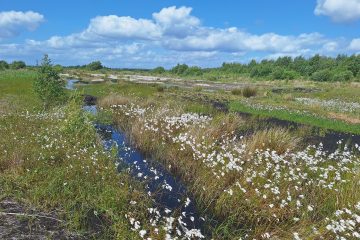
Climate and human activity may damage world’s largest tropical peatlands, new study finds

January 30th, 2018
New research has discovered that both climate change and human activity have the potential to “significantly damage” the world’s largest tropical peatland in central Congo.
The tropical peatlands in the Cuvette Centrale are the most extensive in the world, covering around 145,500 km2, twice the land area of Ireland.
However, according to a new paper in the journal Mitigation and Adaptation Strategies for Global Change, the ecosystem could turn from a carbon sink to a carbon source due to threats from both climate change and human activity.
Although many of the threats may appear “somewhat distant”, the researchers warn that any future hydrocarbon exploration, logging, and plantations could “significantly damage the peatland ecosystems”.
Main Threats to the Peatlands
The paper indicates that climate change poses a threat to the peatlands as it can reduce the overall amount of rainfall and cause greater evaporation due to higher temperatures. This could lead to drier periods and an increase in decomposition of the peatlands and a greater loss of carbon, the paper states. The researchers note that such conditions would also reduce the levels of carbon that can be absorbed by the peatland.
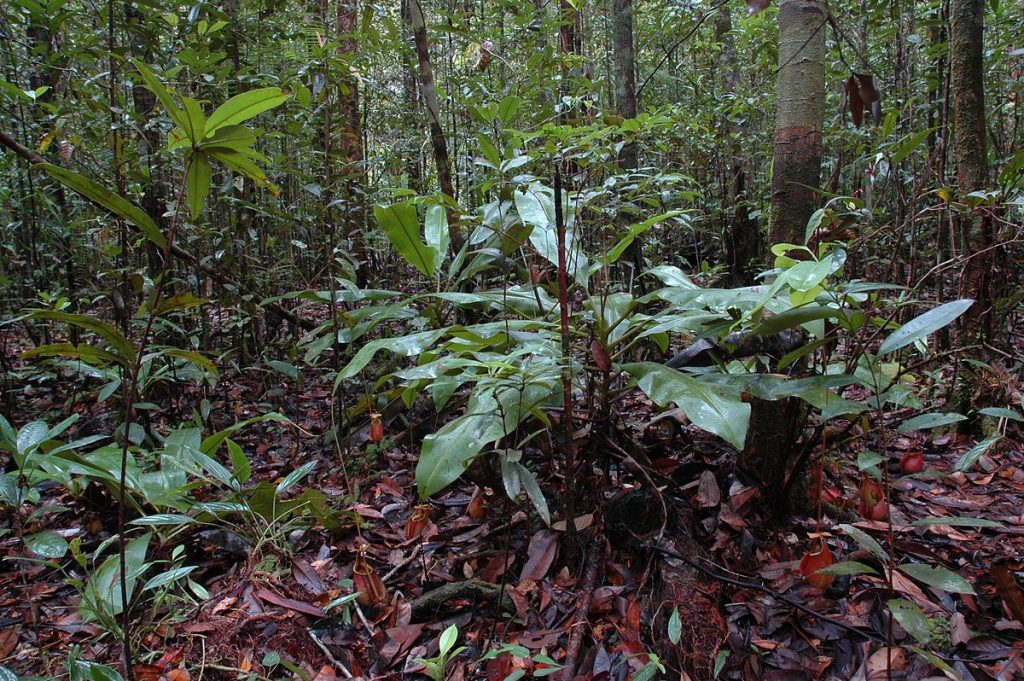
Example of Peat swamp forest in Gunung Mulu National Park Photo: JeremiahsCPs
According to the report, another threat to the peatlands is deforestation due to pressures from both the agricultural and palm oil industry as the removal of trees and loss of canopy may expose the peatland surface to high temperatures, drying the land and causing the release of more carbon.
The presence of palm oil companies in the Congo is already supported by international funds and government incentives, the report finds, with investment expected to increase as productivity in South East Asia declines.
Officially Protected Areas
Around 11 per cent of the peatlands are officially protected and a significant portion of the peatlands are Ramsar sites – wetlands of international importance protected under the 1971 Ramsar Convention. The Convention is an intergovernmental treaty for the conservation of wetlands and their resources.
However, while the Convention offers a framework for the protection of the wetlands, actual protection of these sites is still lacking, due to insufficient investment, the report finds. The researchers suggest that better conservation of the peatlands can be achieved by combining climate, biodiversity and development funding with the areas covered by the Convention.
[x_author title=”About the Author”]

Friends of the Earth, An Taisce, and Stop Climate Chaos lead the charge to amend the Climate Bill before it Read more
TV channel ARTE are looking for Irish people to take part in a programme which will air during the COP21 Read more
The Environmental Pillar wishes to make clear to consumers and public that it rejects the awarding of an environmental certificate Read more

The environmental and heritage group are rejecting calls from the Irish Farming Association to shorten the hedge cutting times. An Read more