Department of Agriculture release new data on pesticide use
April 13th, 2018
New data from the Department of Agriculture reveals that 3,135 tonnes of pesticides were used in Ireland in 2016. Pesticide sprays include herbicides, fungicides, insecticides and other industrial chemicals.
The 2016 data points to an increase of 14 tonnes on the previous year, and a jump of 219 tonnes from 2013 – the year in which the ‘Origin Green’ sustainability initiative was launched by An Bord Bia.
According to the Irish Wildlife Trust, the “ambitious” campaign is expensive, ineffective, and nothing more than “marketing spin”
IWT Campaign Officer, Pádraic Fogarty, said that the “ever-increasing tide of chemical sprays” used in agriculture is “driven” by government agri-business expansion plans.
“Our natural heritage, and the healthy environment we once enjoyed, is paying a heavy price for this unsustainable trend,” he warned.
Pesticides are a major cause for the declining number of pollinating insects, with data from the European Food Safety Authority indicating that the use of neonicotinoids poses a threat to the bee population.
The EPA’s Drinking Water Report 2016 indicates that pesticides are one of the three main causes of concern for the quality of water in our public water supplies.

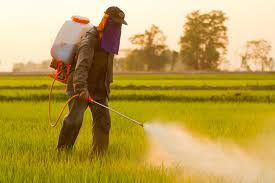
Photo: ColiN00B/Pixabay
Recently, Donegal County Council warned farmers about the increasing levels of pesticides in the local water supplies following the detection of MCPA in drinking water.
MCPA, a powerful, selective, and widely used phenoxy herbicide, was the most commonly found pesticide in the EPA’s Drinking Water Report 2016, detected in 37 samples.
The herbicide is usually detected in the summer months and in early autumn as it is applied to grassland for ragwort, rush, and thistle control.
The EPA report finds that Irish Water has ‘improved monitoring’ of public water supplies for pesticides in recent years, including a new monitoring programme of all public supplies for the 21 most common pesticides found in Irish waters.
The EPA added, however, that “widespread” and “persistent” failure to meet the standard has emerged, with potential pesticide failures identified across 44 supplies in 2016.
Fingal County Council also made an announcement last week that environmentally friendly alternatives to glyphosate are to be trialed in local farms in the district.
Councillor David Healy commented: “Phasing out pesticides is vital to protect our insects, particularly the pollinating insects which have such an important role in our ecosystems. Our parks and open spaces must be places where nature can thrive.”
[x_author title=”About the Author”]
Results of urine tests taken from 48 Members of the European Parliament reveal traces of glyphosate, a well known herbicide. Read more
Yesterday, EU deputies failed, for the third time, to reach an agreement on whether or not to renew glyphosate, leaving Read more
August 25th, 2016 A new pesticide, found to be harmful to bees, is currently awaiting approval for sale in Ireland. Read more
February 24th 2017 Agrichemical giants, Bayer and Syngenta, are back in the European courts attempting to have the European Commission's Read more