Analysis: Are technologies to remove CO2 the solution to climate change?

February 14th, 2018
The use of Negative Emission Technologies (NETs) to remove CO2 from the atmosphere is not sufficient to keep global warming within the Paris Agreement targets, a new report has found.
The multinational study from the European Academies’ Science Advisory Council (EASAC) evaluated the climate change mitigation potential of NETs such as afforestation.
These technologies are seen as part of the solution to the issue of climate change, but the EASAC report finds they have “limited realistic potential” to remove large amounts of CO2 from the atmosphere.
In 2011, the Intergovernmental Panel on Climate Change (IPCC) stated that global emissions cannot exceed 1,000 gigatons (Gt) CO2 until 2100 to have a chance of meeting the Paris Agreement target of limiting global warming to 2°C.

Forest Photo: pxhere
Since the release of the IPCC report, it is estimated that a fifth of that quota has been emitted and 40 Gt CO2 is added each year.
If emissions continue at that rate, the maximum of 1,000 Gt will be exhausted by 2050, indicating that from 2050 CO2 emissions must be reduced to zero.
This finding underlines the necessity of drastic emission reductions in order to decrease CO2 to sufficient levels.
Reducing emissions to zero is extremely difficult, especially in certain sectors like agriculture or air transport. Additionally, runaway and feedback effects from CO2 that are already in the atmosphere will continue, potentially elevating CO2 to dangerous levels.
Hence, NETs will be necessary as part of the long-term solution to climate change, even though they pose financial and environmental risks, as they involve “high economic costs and likely major impacts on terrestrial and marine ecosystems,” according to the study.
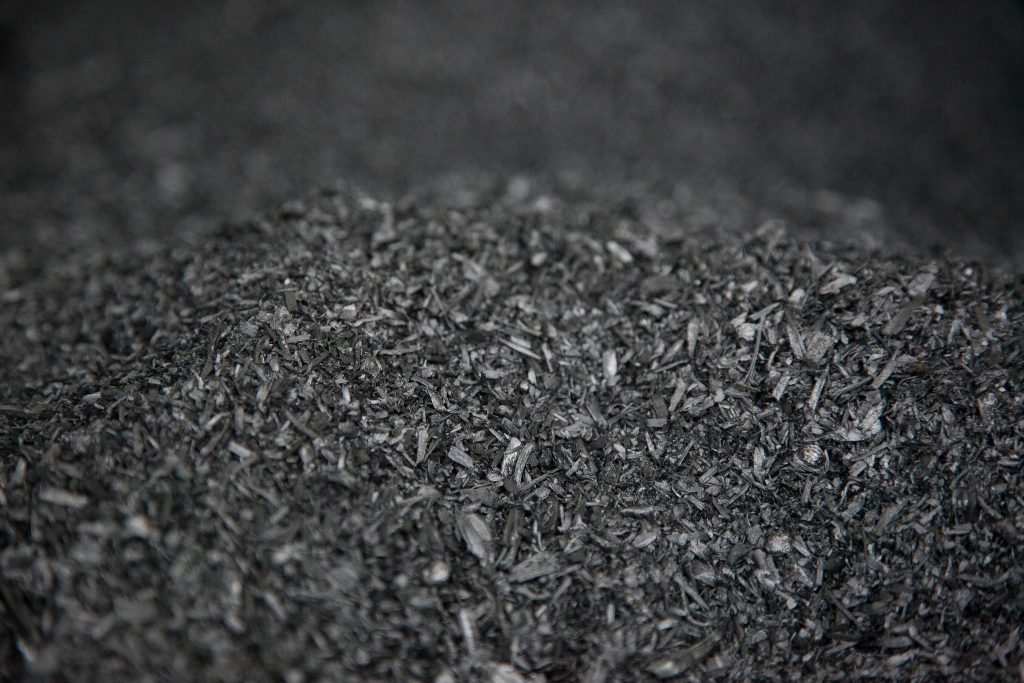
Biochar is an evolved charcoal made from woody biomass Photo: Oregon Department of Forestry
Negative Emission Technology in Ireland
Taoiseach Leo Varadkar has recently described Ireland as a climate “laggard” and has higher per capita GHG emissions than the EU average.
There are a few NETs that could potentially help Ireland reduce its overall contribution to climate change, according to a review by scientists from Dublin City University and Trinity College Dublin.
The most immediately suitable NETs for Ireland are afforestation, biochar and enhanced soil carbon sequestration.
While these methods are ready to deploy and could offset up to 11 per cent of Ireland’s current annual emissions, they also come with certain risks.
Biochar, for example, a plant by-product that is added into the agricultural soil to function as a carbon sink and to increase soil fertility, has been associated with negative environmental effects such as increasing the soils’ particulate matter (PM) emissions.
Furthermore, these short-term NETs also have limited carbon storage capacities that would likely be saturated by 2050 and stored carbon from these methods is highly vulnerable to re-release.
Long-term NETs suitable for Ireland are Bioenergy with Carbon Capture and Storage (BECCS) and Direct Air Carbon Capture and Storage (DACCS). These methods are based on capturing carbon from the air or bioenergy production and subsequently storing it underground.
Carbon Capture and Storage is not saturated as fast as short-term methods and stores carbon for longer times, but it is to date very costly and not yet at the technological standard necessary to be considered as a nationwide solution.
Consequently, NETs can play a role towards achieving Irish emission goals, but require further research and will not be able to replace a decisive reduction of emissions.
According to Alwynne McGeever from Trinity College Dublin and co-author of the Irish review, “immediate reduction in ongoing gross emissions must remain the highest priority for Ireland’s climate change mitigation actions”.
[x_author title=”About the Author”]
Devastating winter flooding could be up to eight times more frequent because of climate change, flooding expert has warned.
The Irish government need to stop pleading we are a special case in relation to climate change and start doing Read more
The charity, which works to preserve Ireland’s natural and built heritage, sets out seven key areas that must be acted Read more

Alicia and her Planet Pals visit local schools and teach children about environmental issues using puppet shows and competitions. “We Read more