Biodiversity spotlight: golden eagles

11 March 2022
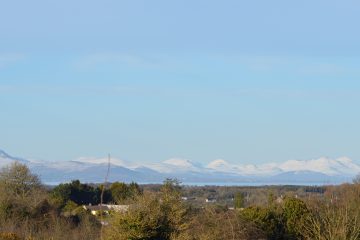
If you ever find yourself amidst snowy mountains, keep your eyes on the white as much as you can. If you’re lucky, you might catch the silhouette of a golden eagle.
With a two-metre wingspan, they’re one of the largest birds of prey. Put them wingtip-to-wingtip besides most people, and they’d be considerably bigger.
Lorcan O’Toole of the Golden Eagle Trust first saw one back in 1992 in Scotland. It was a wintry February morning, and he managed to spot one.
“The sheer size of it was incredible. At that stage in Ireland, we didn’t even have common buzzards. The biggest bird of prey I would have seen was a sparrowhawk, or maybe a hen harrier. It was just the ability of the bird, this eagle just soaring effortlessly,” he told us.
They often live in upland habitats, and through a diet made up of hares, grouses and foxes, make it through the harsh winters of wherever they find themselves.
If you went out golden-eagle-spotting in Ireland prior to 2001 though, your binoculars wouldn’t have caught a glimpse of them.
As a result of human activities, golden eagles became extinct in Ireland in the early 1900s. This was due to several reasons, according to Lorcan.
There were a lot of deliberate killings of golden eagles from about the 1850s onwards, whether that be from shooting or poisoning. A taxidermist in Belfast stuffed about two dozen of them, and then there were naturalists also unintentionally adding to the problem through egg collection.
That pushed Ireland’s population of them to the mountainside, but eventually they stopped breeding altogether.
“Reasonably successful” reintroduction efforts
The effort to bring them back to Ireland began in the mid-1990s. Those involved in the campaign to reintroduce them to Donegal spent time engaging with local farmers and landowners about the project, and a year later, the first set of golden eagles were brought over.
“Since it’s started, it’s been reasonably successful,” according to Lorcan.
“We may have thought that they would have spread outside of Donegal by this stage. The research that the National Parks and Wildlife Service did prior to the programme suggested there was more food in those mountains, but it seemed the conditions of the habitat deteriorated since it started,” he said.
The number of prey for the birds – namely hare and red grouse – may have decreased in Donegal’s uplands, which may be contributing to why they haven’t spread out more.
But, lots of actions environmental activists have long been calling for in Ireland would bring a number of co-benefits to golden eagles it turns out.
Improving Irish uplands – where golden eagles are currently based – would revamp Irish biodiversity as a whole. It would increase carbon sequestration and it would improve water quality too.
“I think there’s now a greater understanding that the uplands need care and attention. Though they might not be heavily populated, what happens in uplands has a big impact on the lowlands,” according to Lorcan.
This is the third instalment in our biodiversity spotlight – we looked into the lesser horseshoe bat and hen harriers not too long ago. Go check them out!
The heritage organisation has dismissed the campaign as 'empty PR', while the semi-state company continues to extract peat on an Read more

July 6th, 2017 With the Fossil Fuel Divestment Bill subject to pre-legislative scrutiny in the Dáil last week, Lia Flattery Read more
Globally, conventional agriculture is still following the same model of working with the land that led to the great dust Read more

July 13th, 2017 With the EU (Withdrawal) Bill – better known as the Great Repeal Bill – being published today, Read more