Extreme weather events more frequent and costly over past four decades
April 5th, 2018
Extreme weather events have become more frequent and more costly over the past four decades, according to a new report from Europe’s leading science academies.
The report from the European Academies` Science Advisory Council (EASAC) found that the number of floods and other hydrological events across the world has quadrupled since 1980.
Forest fires, droughts, storms and extreme temperatures have also doubled since 1980, the report finds.
The costs of those extreme events are high. In the USA, the costs associated with thunderstorm losses have increased from US$ 10 billion in 1980 to near US$ 20 billion in 2015, the report finds.
A recent report from the World Meteorological Organization also found that the economic cost of severe weather and climate events in 2017 was the most expensive on record. The report – Statement on the State of the Global Climate in 2017 – states that German reinsurer Munich Re estimated total losses from climate and weather events to be at $320 billion, the largest amount ever recorded.
Keys events include last year’s intense North Atlantic hurricane season, the costliest ever in US history. The total cost of Hurricanes Harvey, Irma and Maria is estimated to be around US$ 265 billion, according to the National Centers for Environmental Information.
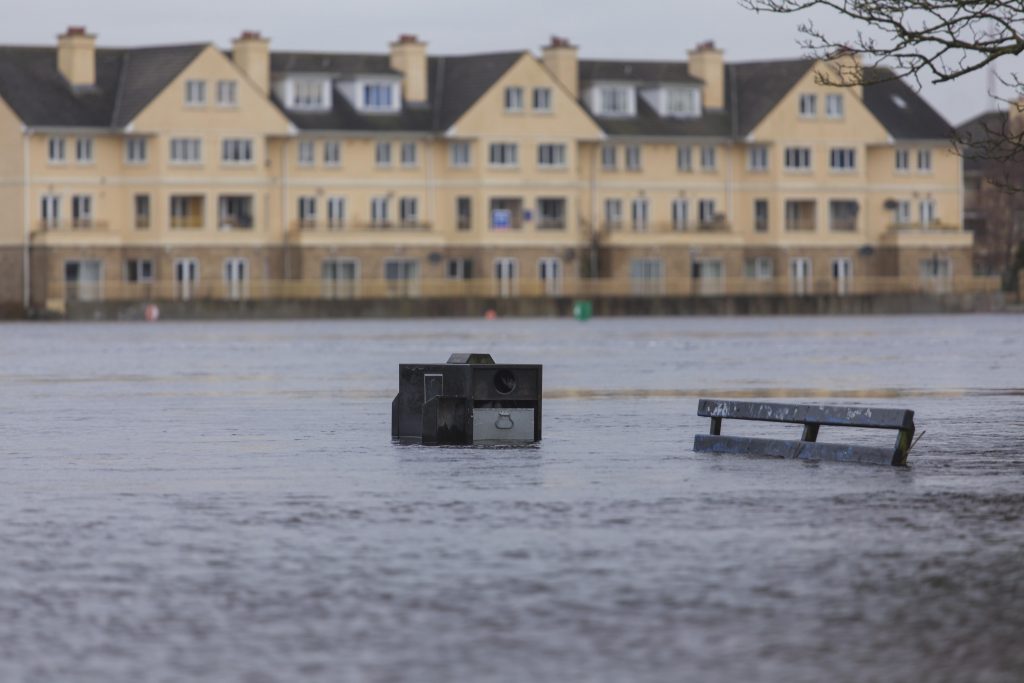
Irish Flooding in 2016 Photo: Niall Sargent
On the other hand, economic losses caused by river-floods in Europe have remained static event though the overall frequency of floods has increased. According to the EASAC, this indicates that protection measures in Europe may have helped to reduce flood costs.
EASAC`s Environment Programme Director, Professor Michael Norton said that the “significant increase” in the frequency of extreme weather events shows that climate proofing is “all the more urgent”. “Adaptation and mitigation must remain the cornerstones of tackling climate change,” he added.
The report also reviewed evidence of major drivers of extreme weather events, including the future of the Atlantic Meridional Overturning Circulation (AMOC). The AMOC is a system of currents in the Atlantic Ocean essential to the global climate system.
The report finds that the AMOC may “switch off” due to the melting of the Greenland icecap. This would have consequences for the climate in the Northwest of Europe.
Another trend observed in the report was evidence suggesting that rising temperatures in the Arctic and extreme cold events in Europe and the USA are related. The report states that this may be the result of weakening jet streams.
[x_author title=”About the Author”]
Devastating winter flooding could be up to eight times more frequent because of climate change, flooding expert has warned.
The Irish government need to stop pleading we are a special case in relation to climate change and start doing Read more
The charity, which works to preserve Ireland’s natural and built heritage, sets out seven key areas that must be acted Read more

Alicia and her Planet Pals visit local schools and teach children about environmental issues using puppet shows and competitions. “We Read more