Plastic waste a ‘threat’ to our migrating bird colonies
May 9th, 2019
Bird migration has always been the subject of fascination and curiosity, stumping the minds of the world’s greatest scientists and writers.
Migratory birds are cherished in the Irish culture and legends. In his book, Ireland’s Birds: Myths, Legends and Folklore, Niall Mac Coitir outlines the significance of travelling birds in Irish history and their influence on shaping our customs and superstitions.
He notes, for example, that ancient wisdom in Co Donegal links the rapid flapping of a heron’s wings on the surface of the river to an impending storm.
In Greece, Aristotle, astounded by the changes in the appearance of newly arrived migrant birds, was convinced that robins migrating in wintertime came back in the summer as redstarts – identifiable by their bright orange-red tails.
Robins and many other species of birds still chase the spring today, but some birds do not return in the summer any longer.
Since the 2000s, bird populations have experienced a precipitous decline. The causes of the dwindling number of birds include overfishing, climate change and a more novel problem – plastic pollution.
The impact of our throwaway culture is becoming one of the key strains on travelling birds, so much so that our plastic problem is the key theme of World Migratory Bird Day this weekend.
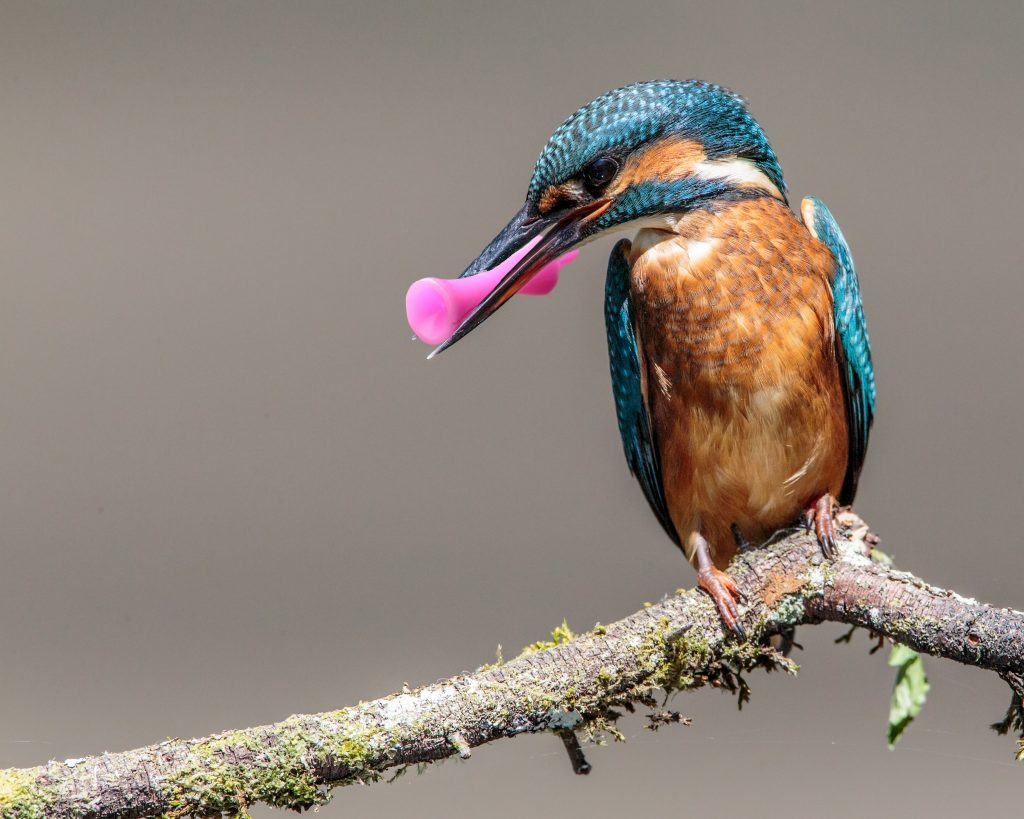
The World Economic Forum estimates that 50 million tonnes of plastic remain in our oceans and that there may be more plastic than fish in the oceans by 2050.
A recent study conducted by scientists at the National University of Ireland Galway (NUIG) also revealed that 73 per cent of 233 deep-sea fish examined in the Northwest Atlantic Ocean were contaminated with plastic.
According to Stephen Newton, BirdWatch Ireland’s Senior Conservation Officer, travelling birds are increasingly bringing plastic to their chicks in temporary nests, mistaking them for food.
“The amount of plastic waste that is brought to seabirds’ nests, for example, is definitely threatening individuals,” says Newton, who studies the impact of plastic pollution on seabirds.
Newton told The Green News that he has observed breeding adults and youngsters dying in the nest of either starvation or strangulation on plastic waste.
According to Newton, although some Irish bird colonies are prospering, plastic pollution remains an “indirect threat” to their existence.
On Little Skellig, home to populous colonies of gannets, Newton has witnessed “many discarded plastic ropes” in nests.
“There is always evidence that the plastic is there, but we can’t always tell whether [birds] ingested plastic deliberately or not, but we think that it’s the case,” he says.
“They are possibly mistaking them for fish eggs, and it is also well known that fishes are eating plastic and obviously seabirds eat fish.”
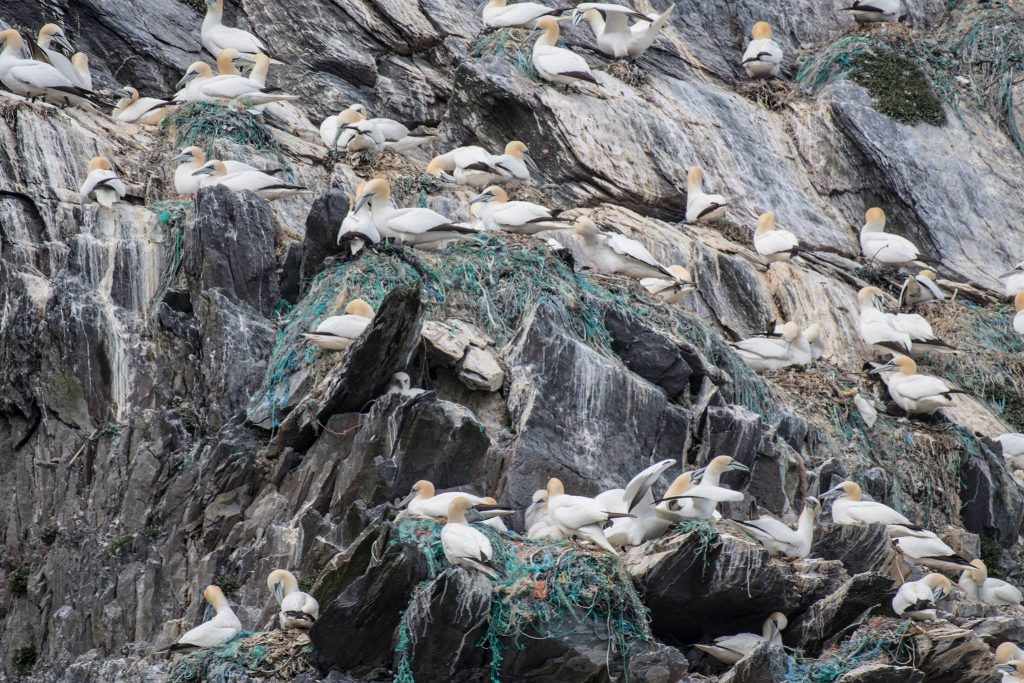
Newton has witnessed birds’ consumption of plastic first-hand while tagging seabirds as part of his organisation’s attempts at conserving the species.
“When we handle [the birds] at their nests to put rings or tags on them, they regurgitate their last meal, and within that, we have found plastic that was inside the fish that’s been regurgitated,” he explains.
Some of Ireland’s migratory seabirds taste plastic waste, even before learning to fly, a human-driven phenomenon that is cropping up with disturbing regularity.
“So, even a bird that has never flown from its nest has already got some plastic in its body before actually leaving its nest,” Newton says. “And to me that is the most worrying thing, to be exposed to these things even before flying.”
“They can live up to 50 years old. So, it gives them a long period of time to build up what could be as lethal as plastic in their stomachs,” he says.
The seasoned conservation officer admits that adverse farming practices also play a role in the rapid decline of bird populations in Ireland, reasoning that our pollution on land also affects our oceans.
“Obviously the sea has been the focus of all plastic campaigns that has gathered great momentum which is great,” he says. “But I think if we cleaned up our act on land, then we could do better at sea.”
Climate change is also influencing the steep decline in the population of seabirds, including the Atlantic puffin. Since 2015, puffins have been listed as “vulnerable” by the International Union of Conservation of Nature, facing a significant risk of extinction.
It is believed that surging sea temperatures is decimating the population of silvery sand eels, puffins’ favourite food. The Centre for Ecology and Hydrology has found that the number of sand eels in the birds’ diet has experienced a 48 per cent drop between 1985 and 2014.
[x_author title=”About the Author”]

Friends of the Earth, An Taisce, and Stop Climate Chaos lead the charge to amend the Climate Bill before it Read more
TV channel ARTE are looking for Irish people to take part in a programme which will air during the COP21 Read more
The Environmental Pillar wishes to make clear to consumers and public that it rejects the awarding of an environmental certificate Read more

The environmental and heritage group are rejecting calls from the Irish Farming Association to shorten the hedge cutting times. An Read more