Ryanair was Europe’s worst polluting airline in 2017, finds environmental NGO

April 6th, 2018
Ryanair has been named as Europe’s most polluting airline in 2017 by a leading European NGO following an analysis of newly released EU data.
New data published by the European Commission indicates that EU carbon emissions under the EU Emissions Trading System (ETS) increased for the first time in seven years.
The ETS monitors emissions of 12,000 airlines, power plants and industries and is responsible for regulating around 45 per cent of Europe’s carbon emissions.
An analysis of the Commission’s data by environmental think-tank Sandbag reveals that Ryanair emitted 9.2 million tonnes of carbon dioxide in 2017.
Anglo-Spanish airline IAG and German Aviation Company Lufthansa follow Ryanair on the list. Experts believe this is due to the three airlines’ high number of flights.
According to Ryanair, the company’s traffic grew by nine per cent over the past year, bringing its total customer base to 130 million.
Last month, the company launched a new Environmental Policy, including commitments to address climate change and bring in policies to lower emissions and noise pollution. Such plans include investing in the most fuel-efficient aircraft.
Overall, ETS-covered airlines accounted for 65.2 million tonnes emissions in 2017, a 6.1 per cent hike compared to the previous year. Under the ETS scheme, airlines must report emissions for all flights that begin or end within the EU.
The International Civil Aviation Organisation predicts that global aviation emissions will grow by between 300 and 700 per cent by 2050.
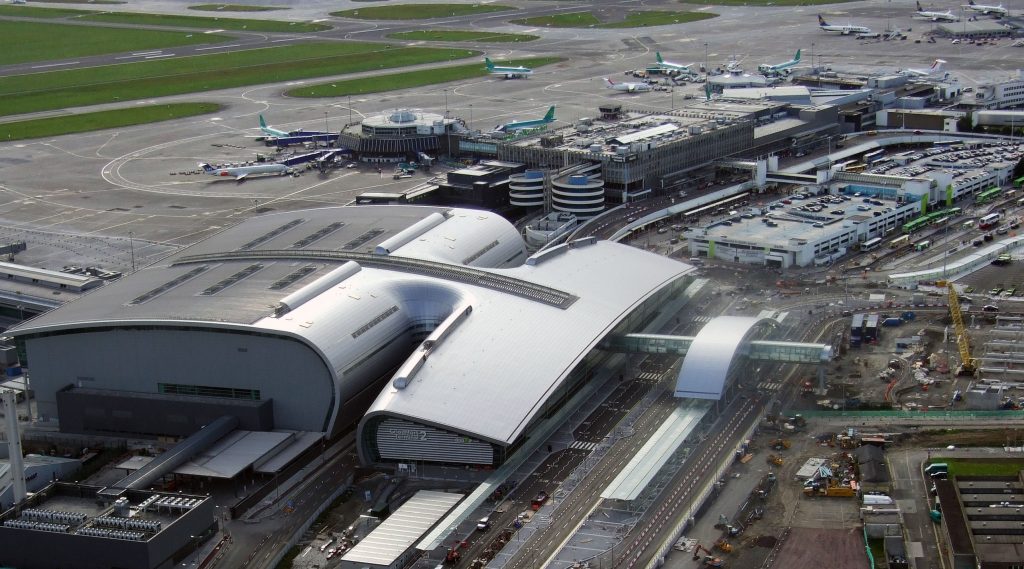
Dublin Airport Terminal 1 & 2 Photo: Colm De Spáinn
Emissions Trading System
Under the system, companies are obliged to purchase tradable greenhouse gas emission allowances.
The scheme was designed to help meet EU’s target of cutting Europe’s carbon emissions by 20 percent from 1990s levels.
All companies under ETS scheme, including airlines, emitted 1.821 billion tonnes of CO2eq last year according to Reuters’s carbon analysts’ interpretation of the data.
The Environmental Protection Agency (EPA) predicted that Europe’s economic growth would lead to an increase in greenhouse gas emissions. Europe’s economy grew by 2.5 per cent in 2017.
The economic growth has also led to a 2 per cent increase in industrial emissions bringing the figure of industrial emissions to 743 million tonnes.
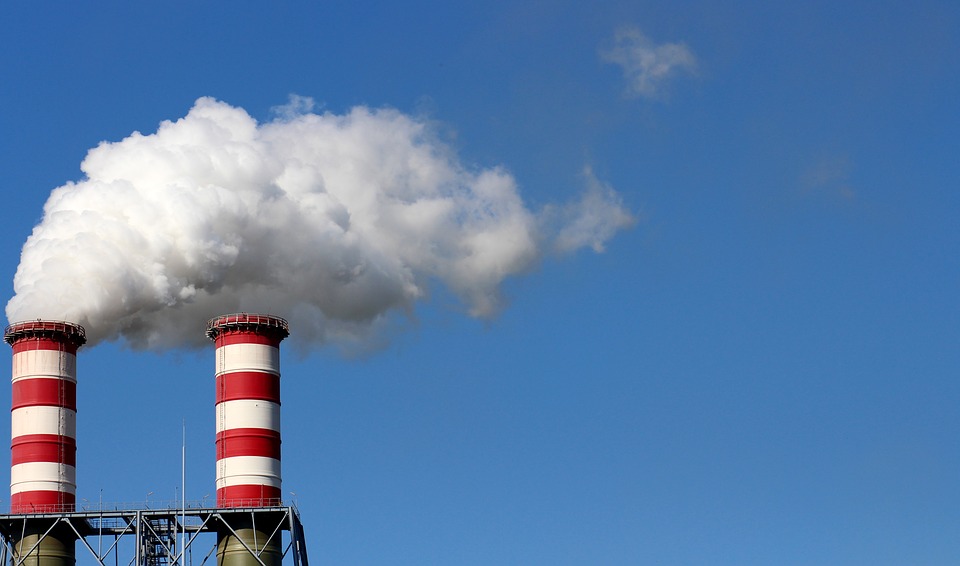
Smoke Factory Industry Pollution Photo: Max Pixel
Other Key Polluters
Lignite (soft dark brown coal), aviation and gas industries are Europe’s top carbon-emitting manufacturers, according to Sandbag’s analysis.
Lignite power plants, in particular, dominate the list of large carbon-emitting power plants.
Poland’s coal plant, Belchatow, ranked first as one of EU’s most prominent contributors to carbon pollution, emitting 37.6 million tonnes of CO2 last year.
According to Sandbag, Germany’s lignite industry is the largest carbon-emitting industry within the EU.
While emissions from power and heating sector dropped by 2 per cent the overall industry emission figure was increased by 1.8 per cent, according to the Commission’s data.
EU’s ETS body and environmental organisations such as EPA rigorously monitor the ETS emission figures.
Last year the EPA had warned that Ireland would be unlikely to meet 2020 EU greenhouse gas emissions targets for agriculture, transport, residential, commercial and waste industries.
[x_author title=”About the Author”]

May 31st, 2017 Policymakers have ignored the potential impact on jobs of moving toward a low-carbon economy, which could lead Read more

May 31st, 2017 The Green Party has warned the government that the Midlands could become Ireland's rust belt unless a Read more

June 1st, 2017 President Donald Trump has formally announced that he will withdraw the US from the Paris Climate Agreement. Read more
June 1st, 2017 President Trump's decision to withdraw the US from the Paris Agreement has been met with concern and Read more